
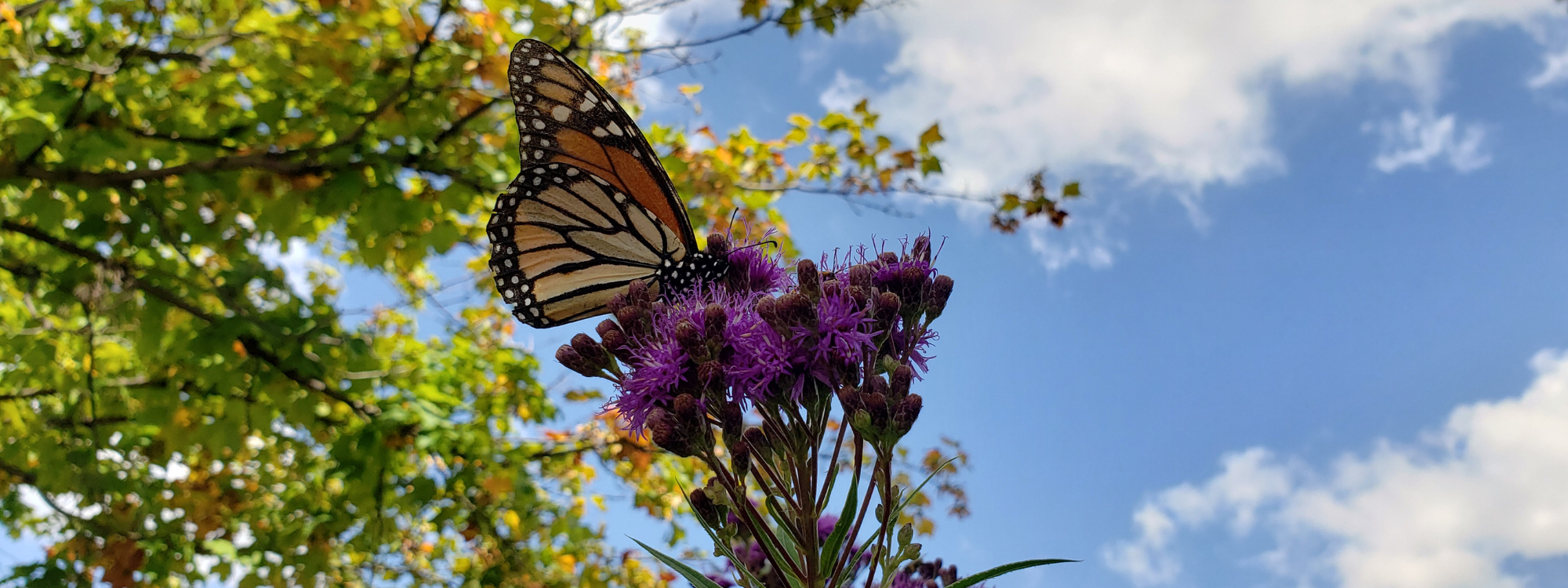
Making a Difference for Our Pollinators
This week is National Pollinator Week, and what better way to celebrate than to learn how to create your very own pollinator habitat? Check out our guide for tips and tricks on how to ensure that your space is pollinator-friendly on a budget.
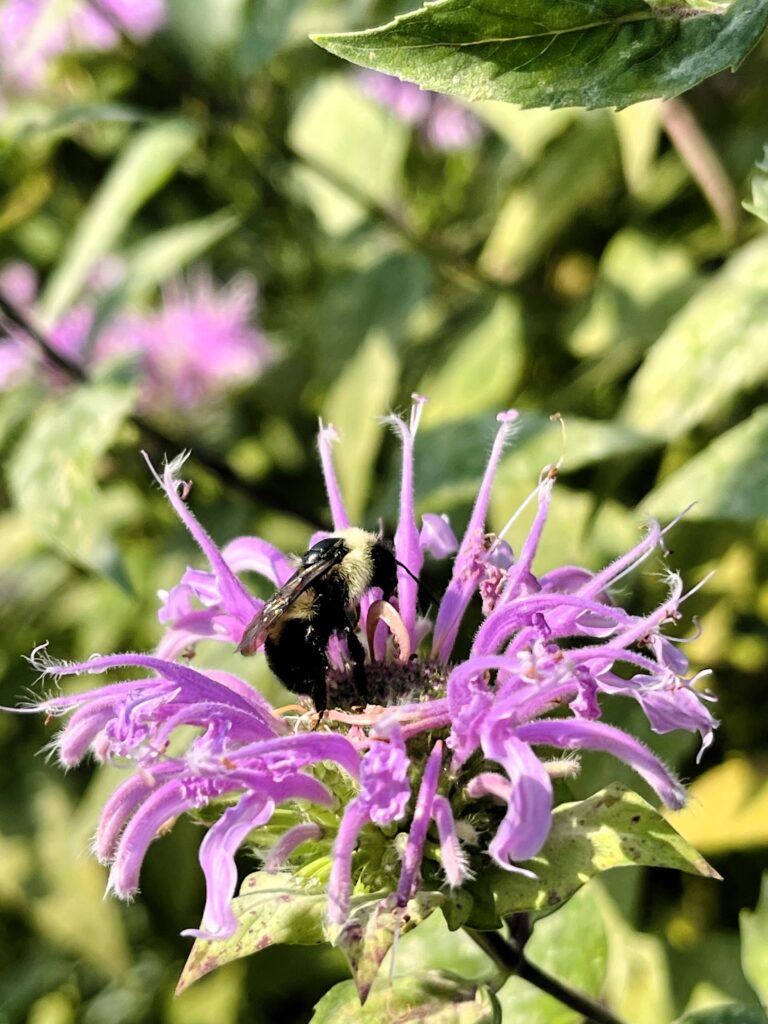
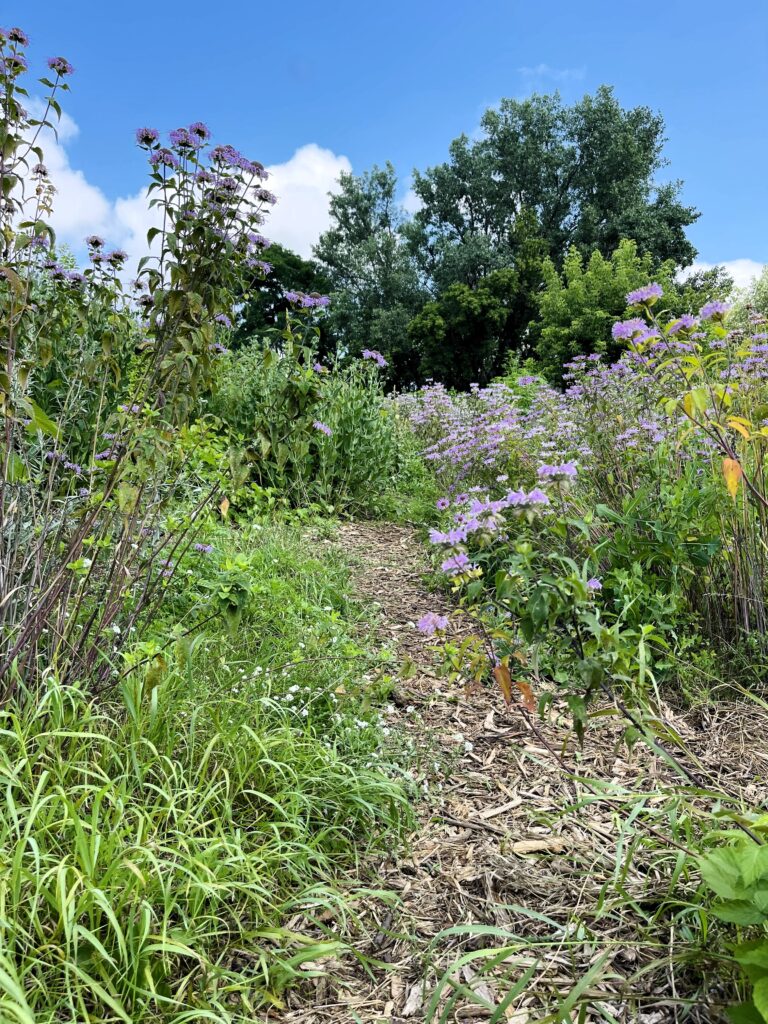
With the start of summer comes warmer temperatures and a host of new blooming colors all around us, and our more-than-human relatives are taking full advantage of what this change has to offer, especially pollinators. Pollinators come in all shapes and sizes, from small bumble bees and butterflies to large birds, and these species play a crucial role in the life cycle of our ecosystem by spreading pollen from one flowering plant to another. Pollinators are responsible for the reproduction of 80% of plants worldwide. Without them, we wouldn’t have fruits, vegetables, trees, and a host of other flowering plants we know and love.
Since time immemorial, Dakota, Ojibwe, and other Indigenous communities in Mni Sota Makoce (what we now call Minnesota) have cared for native plant communities as relatives to create one of the most biodiverse multispecies communities on Turtle Island. During the past 250 years of ecological and cultural violence by settlers, corporations, and government, the livelihoods of native pollinators have been decimated by industrial agriculture, urban sprawl, mass killing of wildlife, species displacement, and climate change. We have to do our part to change the way we are interacting with our environment and the species that call this place home.
As an individual, it can feel like quite the daunting task. But there are some small ways that we can make a big impact. One thing you can do is create a healthy habitat for these pollinators right in your own yard. This is especially crucial in urban environments where sprawling lawns of grass don’t provide enough space, habitat, and diversity for pollinators. By creating habitat for pollinators, you are not only bringing beauty to your space, but you are also providing food, shelter, and other resources for these important species. Here are a few ways you can create a space that you and the pollinators will love.
Turn Your Lawn into a Bee Lawn
If you enjoy having a grass lawn but want to give back to the pollinators, explore a bee lawn. A bee lawn is a lawn planted with grasses that grow slowly and look good with less frequent mowing, and flowers that grow low to the ground. Additionally, these species can handle trampling and bounce back after an occasional mowing. Many local nurseries now sell bee lawn mixes, which often contain fine fescue grasses such as Dutch White Clover, Creeping Thyme, and Self Heal. The seed mix can be spread and established as if you were starting a lawn from scratch, or if you want to incorporate it into an already existing lawn, follow these steps: mow the lawn down to one inch or less, aerate it, and add the seed mix. Additionally, topping with straw can improve germination rates.
Design Your Own Pollinator Garden
If you are feeling ambitious and want to plant a pollinator garden or meadow, here are some tips to do it on a budget (although it does require some sweat equity!):
- Mow the area down to 1 inch or less and cover the area with cardboard. You can save up cardboard for this project, or you can reach out to friends, post on a local Buy Nothing page, or visit local businesses (bike shops and nurseries are good) to get your cardboard free or at a low cost. Ideally, you are looking for non-dyed cardboard with the tape and staples removed.
- Lay down your cardboard and ensure there are no gaps so that unwanted plants don’t pop through.
- Wet the cardboard thoroughly, then cover with a 2-3 inch layer of mulch. Free mulch can be picked up from yard waste sites in Ramsey County if you are a resident, or you can use the website Chipdrop to request woodchips to be dropped off by an arborist in the area. Be warned if you use Chipdrop that you don’t control when the mulch arrives or how much you get. Usually you get a large load (10-15 cubic yards), but it can be a great way to meet your neighbors and share the bounty if it’s too much!
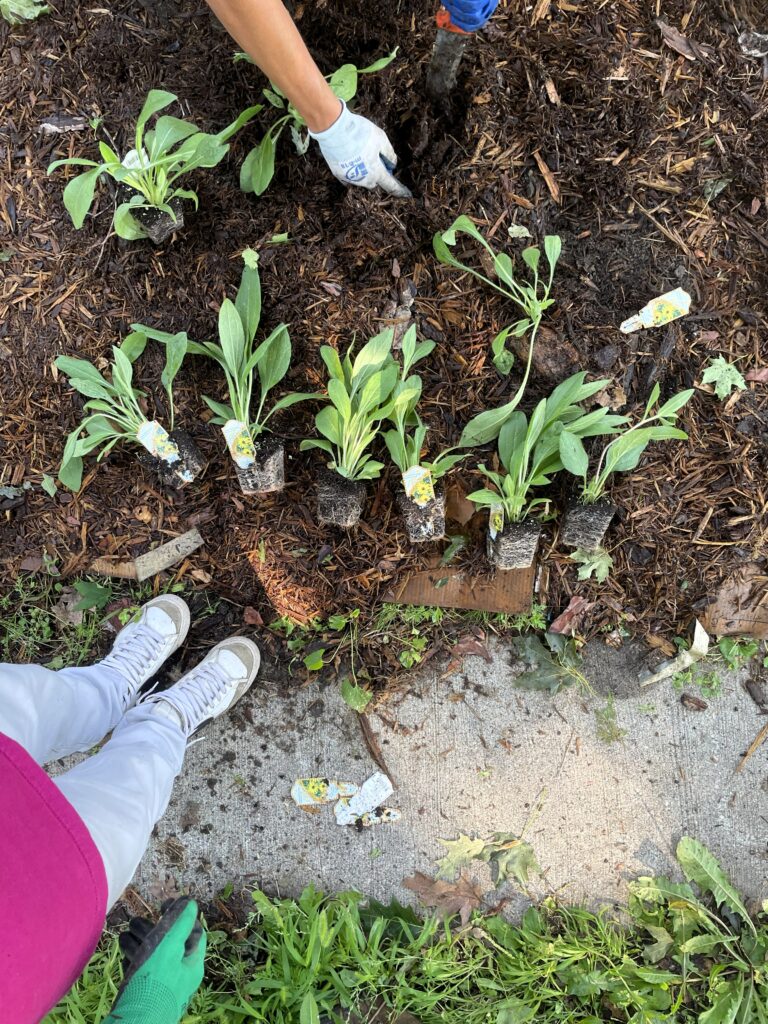
- Once the mulch is spread, wait about 3 weeks or more before planting. When planting, push the mulch aside, cut through the cardboard, and plant into the ground. The longer you wait, the easier this step is.
Select a Diversity of Native Plants
As far as what species to plant in a pollinator garden and how to get them, here are a few things to consider:
- You want to ensure you are planting species native to your area that evolved alongside our pollinators. Take a look at what plant species you see around your area. Additionally, you can consult local nurseries, plant experts, and Master Gardeners for tips on the type of plants that would work well for your space.
- Make sure to include a diversity of plants that bloom in the spring, summer, and fall (including trees and shrubs). This ensures that pollinators will have consistent food throughout the growing season.
- Consider which native plants you enjoy, and how this place will be seen by your community. Combining complementary colors, interspersing forbs with grasses and sedges, and planting taller plants towards the back of the garden are all great ways to make the space your own.
For sourcing your plants, you have a couple of options:
- Buy from local nurseries such as Prairie Moon Nursery, Glacial Ridge Growers, and Minnesota Native Landscapes. Many of these will often have pollinator garden mixes.
- Collect native plant seeds in the fall and winter and sow them at home to plant in the spring. When collecting native seeds, please ensure the area you are in allows for it and that you are being respectful of the space and not taking too much in a way that could harm the native plant community.
- Volunteer with an organization like MnSeed, which will host seed cleaning events where volunteers can take home free native plant seeds.
- Check out the East Side Seed Library located at the Metro State Library for a large array of locally-grown seeds.
- Stay up-to-date on Urban Roots events by visiting our Events Page, signing up for our emails, or following us on social media @UrbanRootsMN. We often do plant and seed giveaways!
For more information on pollinator garden design, plant selection, and other considerations, check out the Minnesota Bee Lab and the Minnesota Board of Water and Soil Resources page on residential pollinator habitat. Additionally, we have a free pollinator garden guide available that will guide you through this entire process step by step. Check it out below!