Thirty Years on the East Side
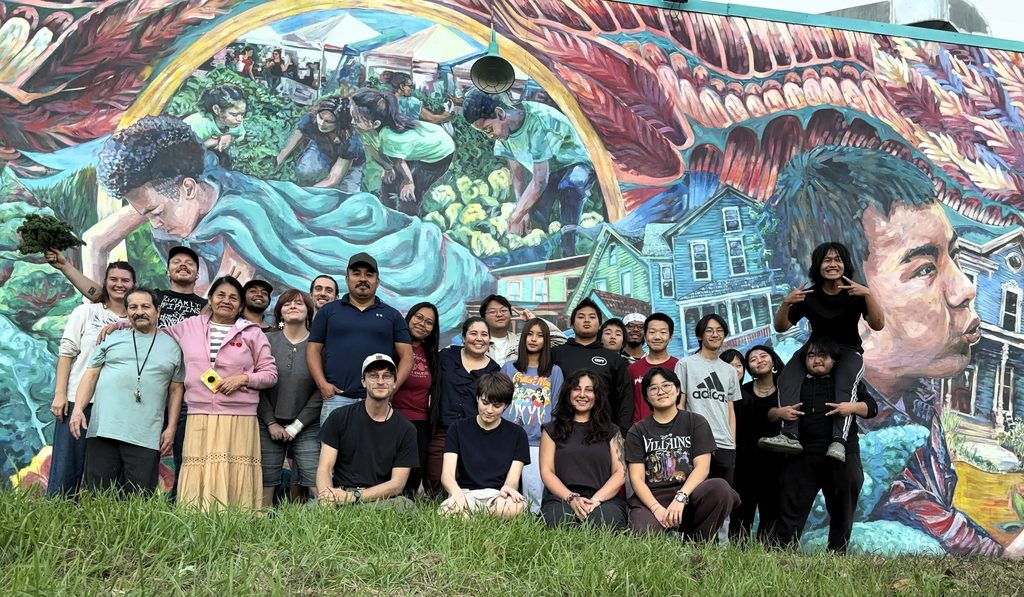
This year, Urban Roots is celebrating 30 years of providing food and environmental programs for youth on the East Side of St. Paul. The Community Design Center of Minnesota (now Urban Roots) was incorporated in 1969 as a 501(c)(3) to empower community residents to reach their goals for better health, well-being, and economic opportunity. Growing food and restoring green space turned out to be especially powerful ways to do exactly that, and thirty years later, we’re still at it.
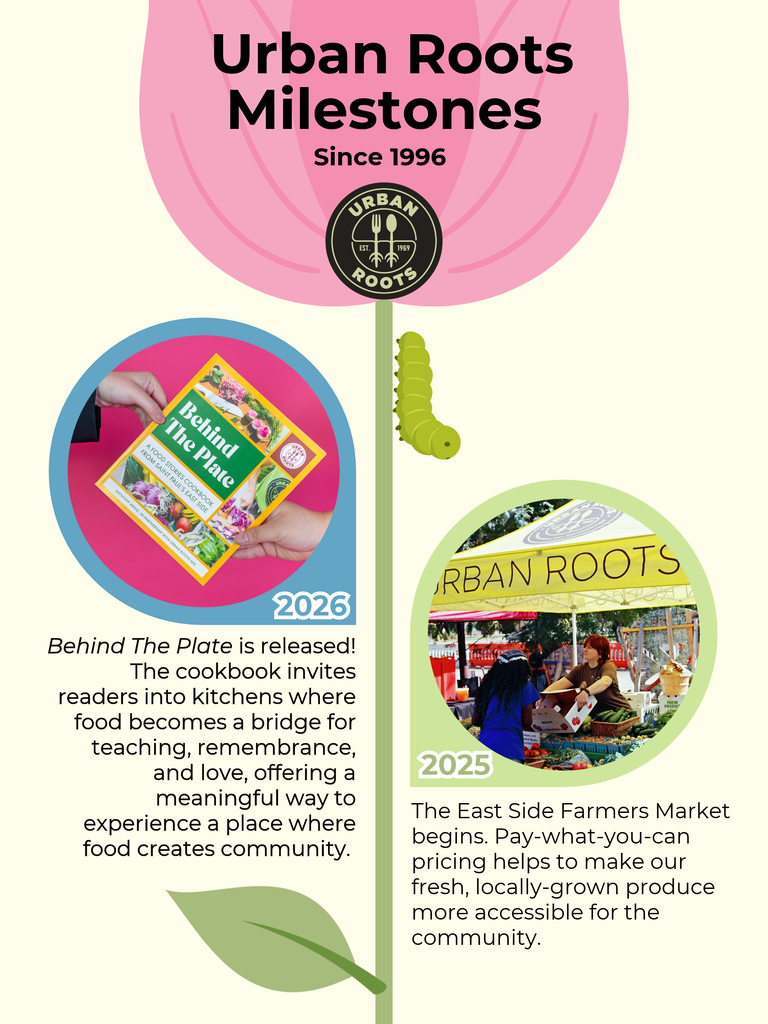
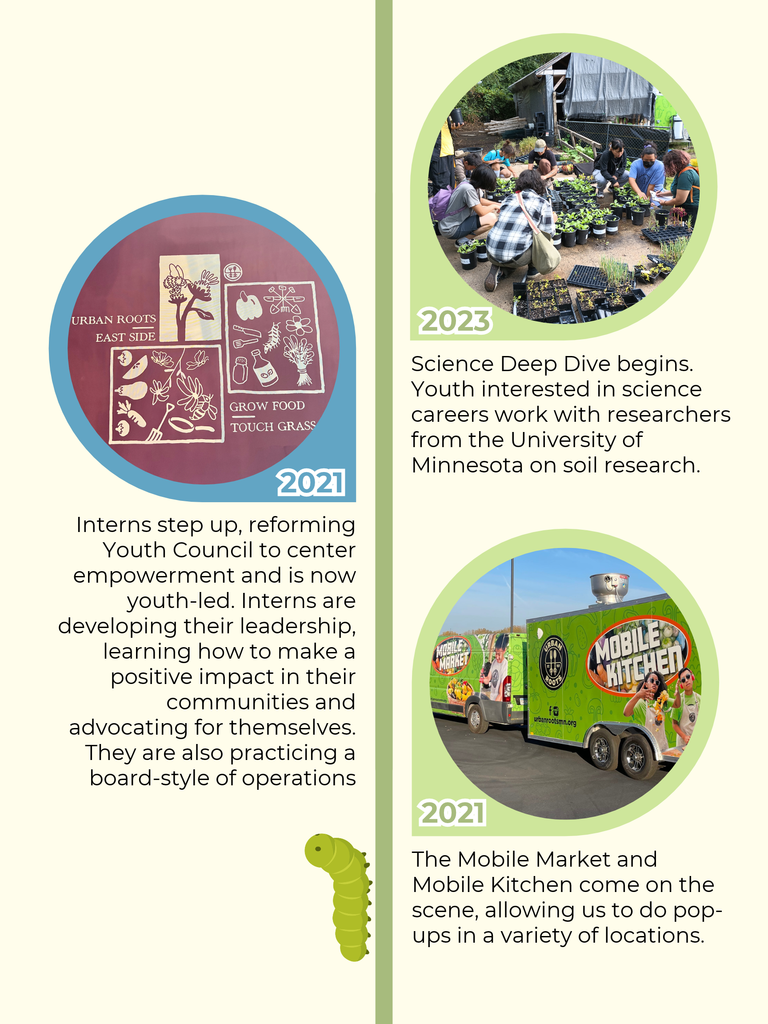
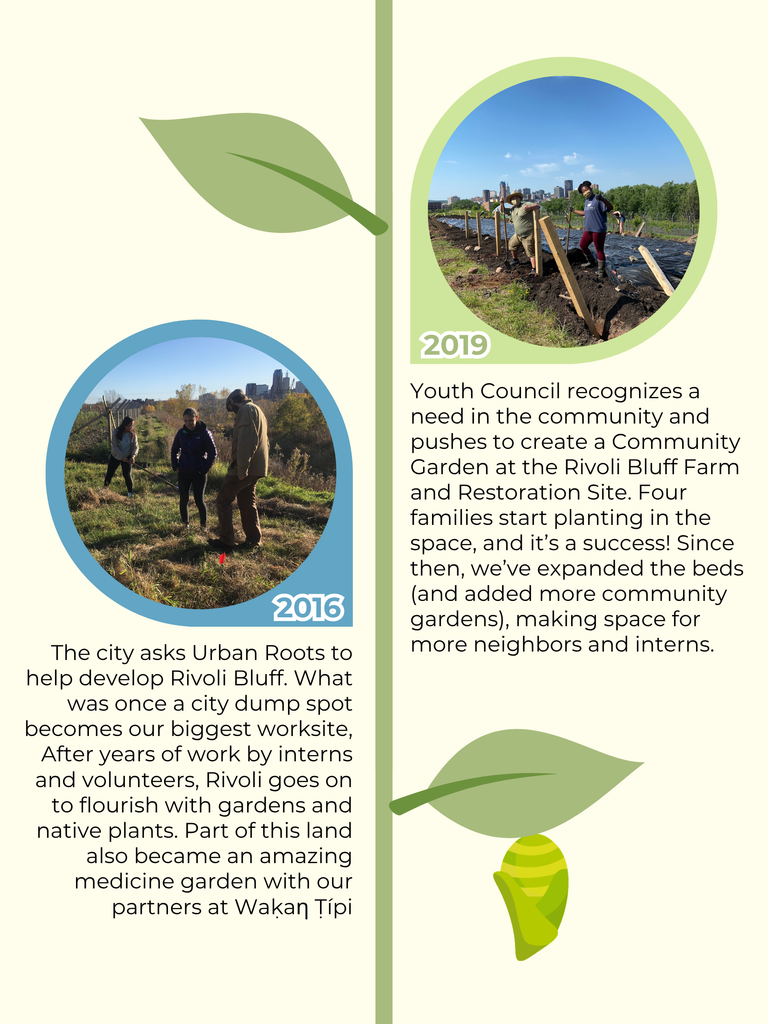
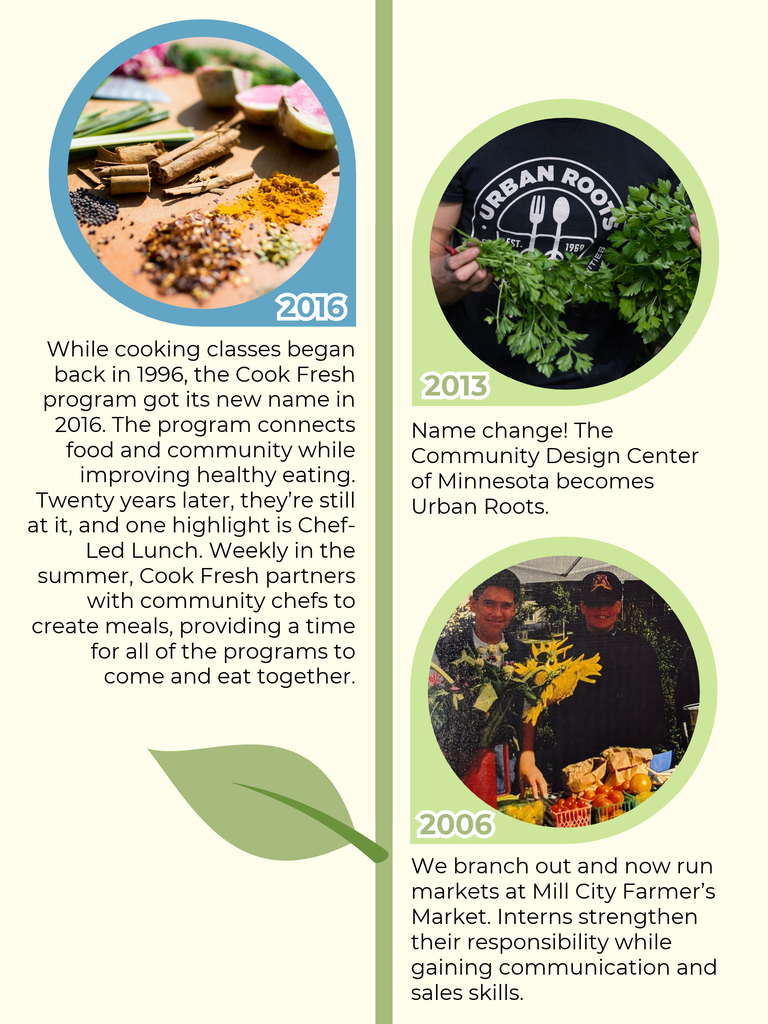
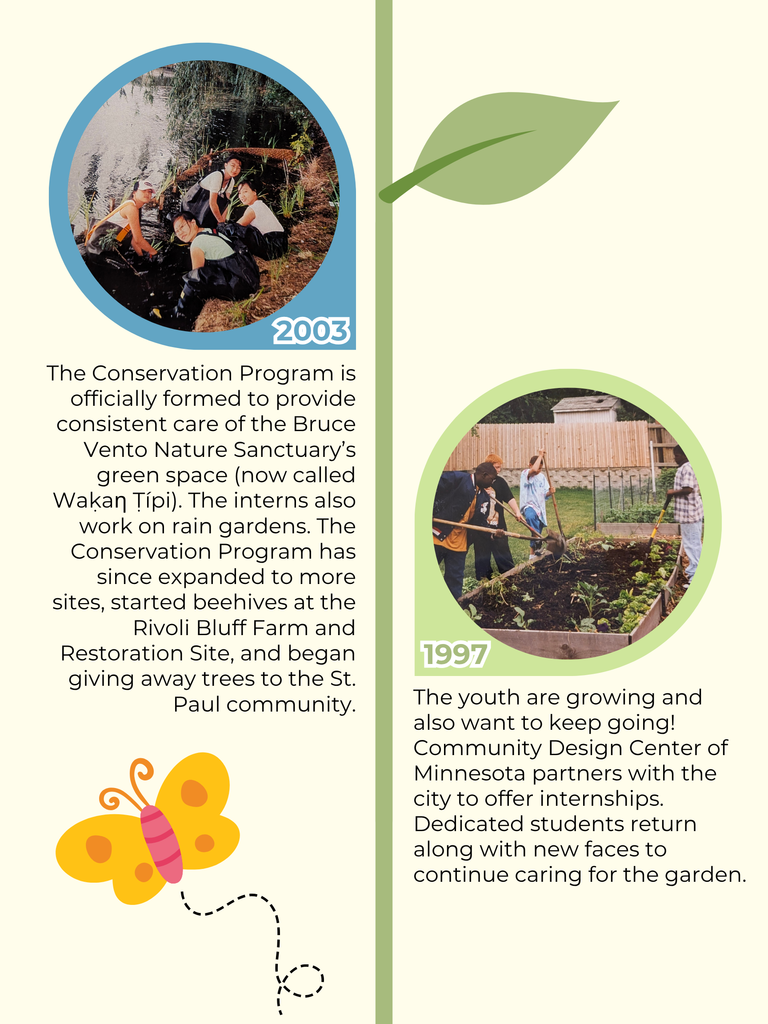
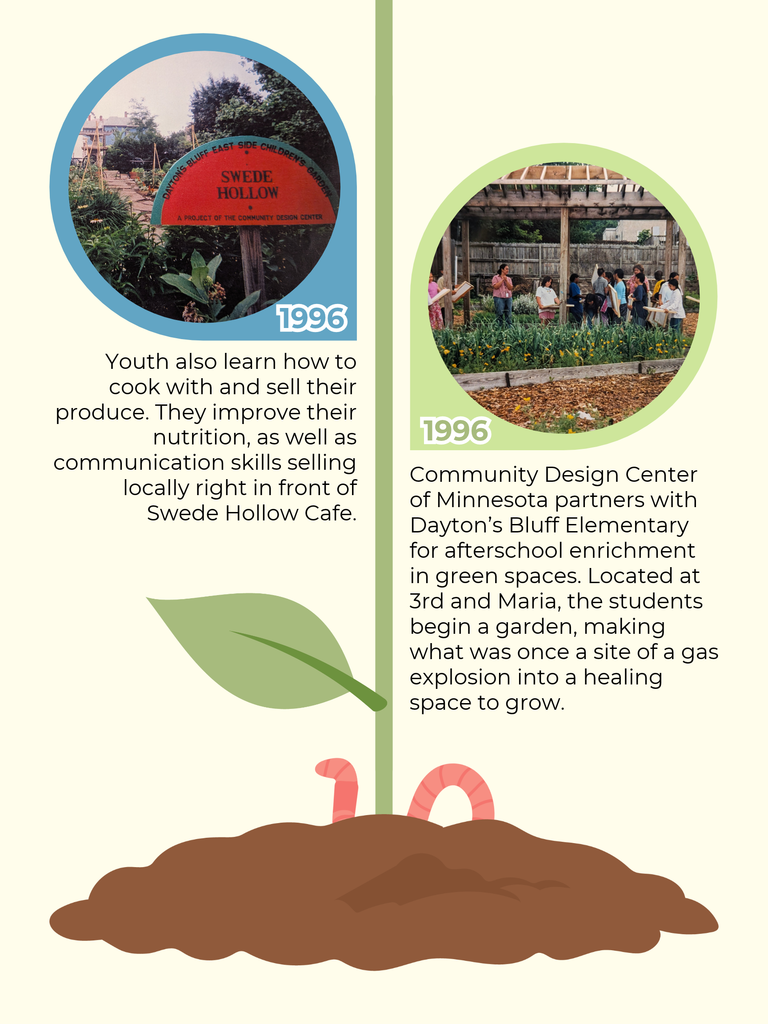
In honor of this 30th anniversary, we asked one of our Crew Lead interns, Tiara, to learn more about and share our history over the last three decades. Below, you can find the timeline she created, as well as her reflections on this project.
Learning Our History
By Tiara Jamons, Urban Roots Crew Lead
The Community Design Center of Minnesota’s/Urban Roots’ extensive history, accomplishments, and changes can get lost in the 57 years it has been operating, but the impacts reach us to this day. I know because I’ve experienced it myself.
Urban Roots made a difference in my teen years, as I joined the Market Garden program when I was only 15 years old. I had assumed I’d leave after a year to explore other jobs, but I stayed the rest of high school and beyond. I’m so happy I was wrong.
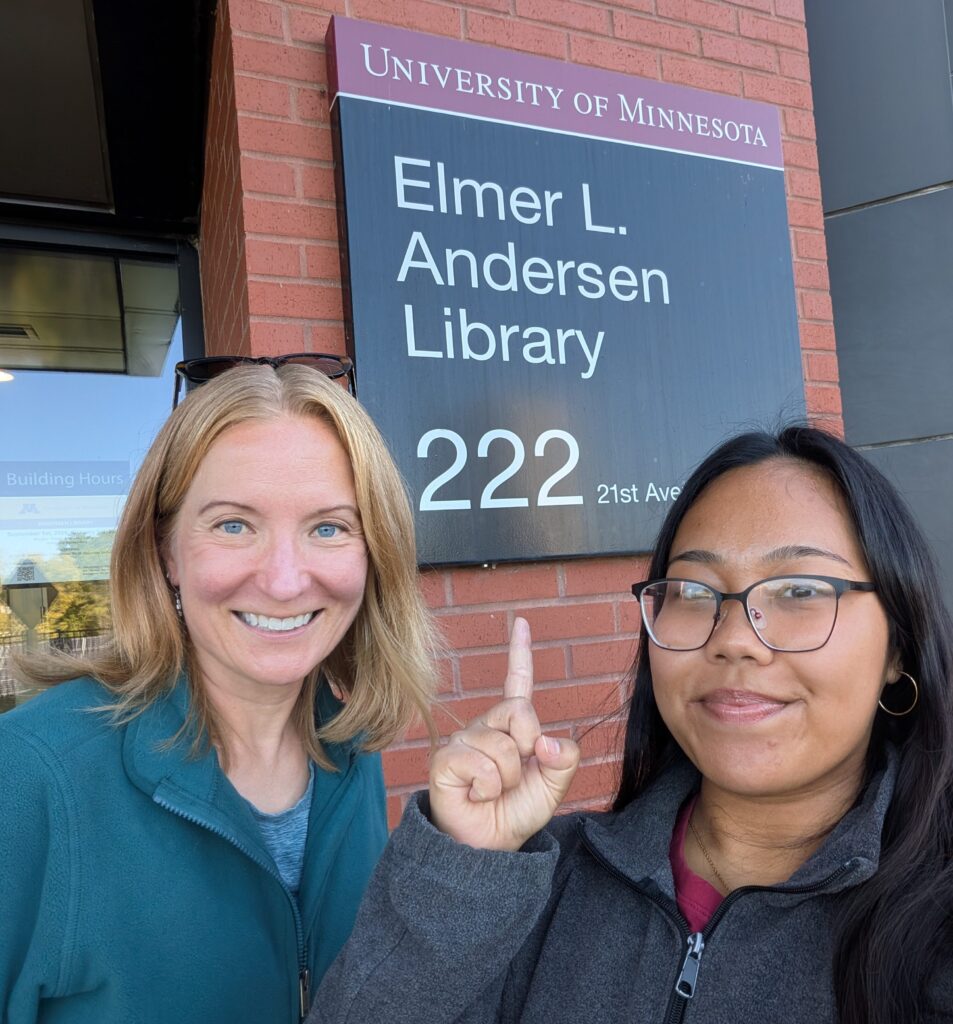
This year marks 30 years since the Community Design Center of Minnesota (CDCM, now Urban Roots) began its food and environmental programming for youth on the East Side of St. Paul. In honor of this milestone, I had the opportunity to learn about our history and share it. This learning involved two trips to the University of Minnesota Archives where much of the CDCM’s documents reside. There, we found several boxes of photos, proposals, articles, and more. I’ve never done this type of history project before. It was daunting, but I quickly became fascinated.
All of our work began at one of my favorite garden sites by Phoenix Market in St. Paul—nicknamed “PM” by interns—which was once the site of a large gas explosion that devastated the community. The CDCM partnered with the local Dayton’s Bluff Elementary School and brought in students to help turn the space into a garden. This afterschool activity was a hit, with the garden being a place of healing for the neighborhood and the students involved. The CDCM’s goal was to connect underprivileged youth to the community, cultivating new relationships while learning about and experiencing the environment. This is still Urban Roots’ goal today, and I think we hit it every single year.
Urban Roots certainly gave me opportunities I would have never experienced elsewhere, and I was able to improve both soft and hard skills, all while having fun. I’ve been able to meet cool people and some of my closest friends because of this internship. This was my safe space and way more fun than school.
I wondered if the CDCM youth felt the same way. Did they celebrate when their seeds sprouted, end a shift together with ice cream to reward themselves, or find comfort knowing this was a safe space for them to be themselves?
This last part—about being a safe space—has been so crucial to me, other interns, and the turning points of the organization. Staff dedicate a lot of effort to help youth interns feel comfortable so that they can grow, and this growth means both literal plants as well as skills, confidence, a connection with nature, and more. In turn, the interns are able to create ways to make the program better for themselves. A big example of this is Youth Council, which used to be an extracurricular activity to plan events, but is now an empowerment zone to learn about and exercise leadership and advocacy. The change was thought about and led by the interns, not only to improve Urban Roots but also our community. One of Youth Council’s biggest projects was creating a community garden for neighbors of the Rivoli Bluff Farm and Restoration Site in 2019. This garden still flourishes today, and has been joined by additional community gardens stewarded by Urban Roots.
There was no way I could fit every accomplishment into the timeline—it is only a glimpse into CDCM’s/Urban Roots’ most impactful turning points since 1996—but it shows how much we’ve grown and branched out from what started as an afterschool activity.
Learning the behind-the-scenes of our history has given me a greater appreciation of this internship and those who came before me. It’s especially bittersweet because this year we had to say goodbye to our PM garden, which was also the very first site I worked in at Urban Roots, but the only constant is change and better things will come. I hope I didn’t get to see Urban Roots at its prime and that this program will continue to grow, leaving me a part of history.