Tim’s Story
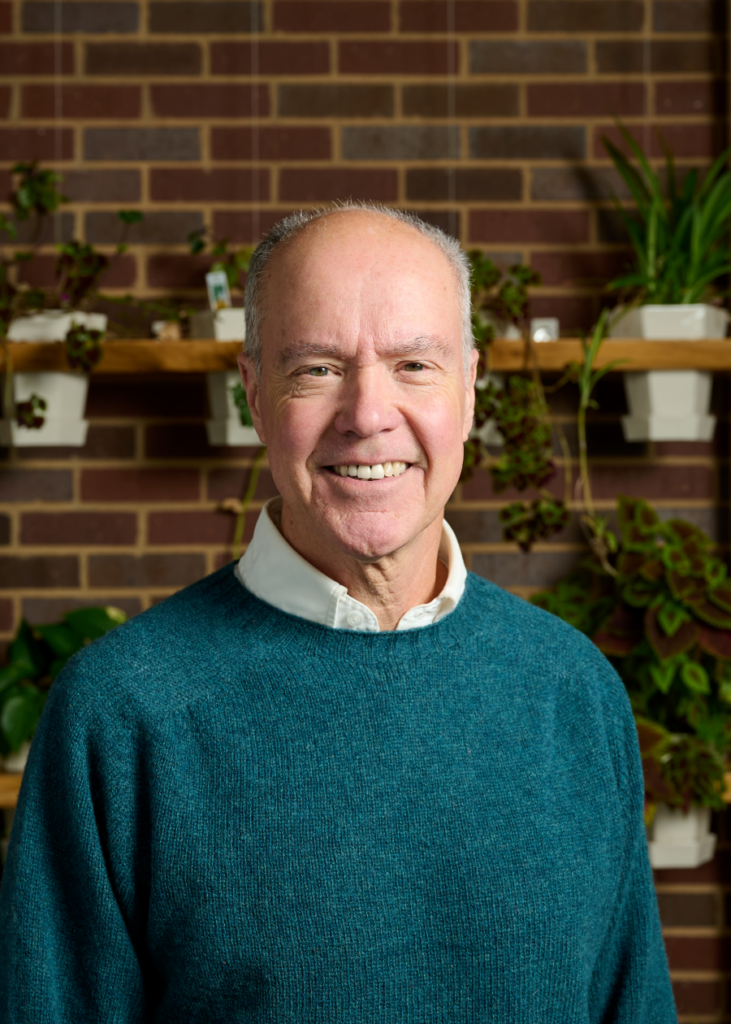
Tim Dykstal, Board of Directors and long-term supporter
In 2016, the Dayton’s Bluff Neighborhood Association and the East Side Neighborhood Development Corporation turned to Urban Roots to make something out of a plot of land at the western end of Minnehaha Avenue that was left over after a series of affordable homes was built above it. Perched above ancient railroad tracks, in what constituted the development’s back yard, “Rivoli Bluff” was rocky, inaccessible, and dry. Day by day, Urban Roots staff, interns, and a cohort of volunteers removed existing vegetation, built an equipment shed, and installed big bins to hold water from the neighborhood’s fire hydrants, making the land usable. Rivoli Bluff now stands as Urban Roots’ largest and most productive community garden plot, boasting rows and rows of vegetables, a budding orchard, and providing—as originally intended—a community gathering spot.
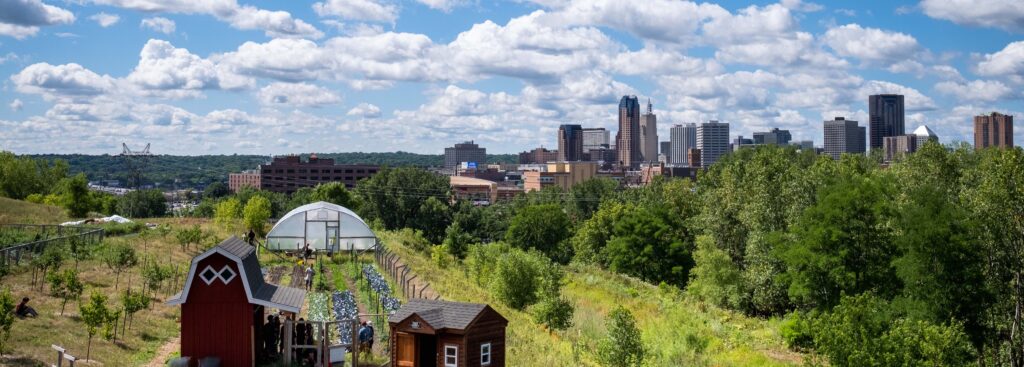
Rivoli Bluffs Farm and Restoration Site
As any gardener can attest, all progress in a garden is incremental, growing step by step, spade by spade, seed by seed. A seed may take one year, and never bloom in another. Volunteers may sprout up, unannounced, and become a productive plant. Some varieties—like corn, squash, and beans—thrive in a symbiotic relationship, supporting one another as they rise. Others need their own spaces to grow. Above all, nothing can be forced. Plants develop at their own pace, as long as they have soil, water, and sunshine.
I’m drawing an obvious analogy here between gardening and Urban Roots’ youth development model. I’ve been on the Urban Roots board for about eight years, and in that time I’ve seen it grow from an understaffed, underfunded nonprofit to a thriving organization that is steadily expanding its geographical base and the range of its programs. What’s so special about Urban Roots, though, is that this growth is organic, shaping itself to the needs of the youth that it serves, even as external conditions and internal desires change. During the pandemic, for example, we supplemented our emphasis on growing and cooking food by giving it—and vital household supplies—away to families in need. Animal husbandry was never part of the plan until interns enthusiastically endorsed the idea of raising chickens, and now Doja, Pepper, Yuzu, and Kai greet them every day. And, although it’s not verbalized in a strategic plan, an essential part of the Urban Roots experience is offering kids a place to just hang after school and after work.
What’s so special about Urban Roots, though, is that this growth is organic, shaping itself to the needs of the youth that it serves, even as external conditions and internal desires change.
The most valuable seeds that Urban Roots has planted, grown, and harvested are community and the sense of belonging that Urban Roots gives its youth. These are just as critical as the soil, water, and sunshine that feed the garden plots. I support Urban Roots as a Board member and a donor. As a fellow gardener, I await more volunteers.
-Tim Dykstal, Board of Directors and long-term supporter