Sow Good: Starting Seeds With Urban Roots
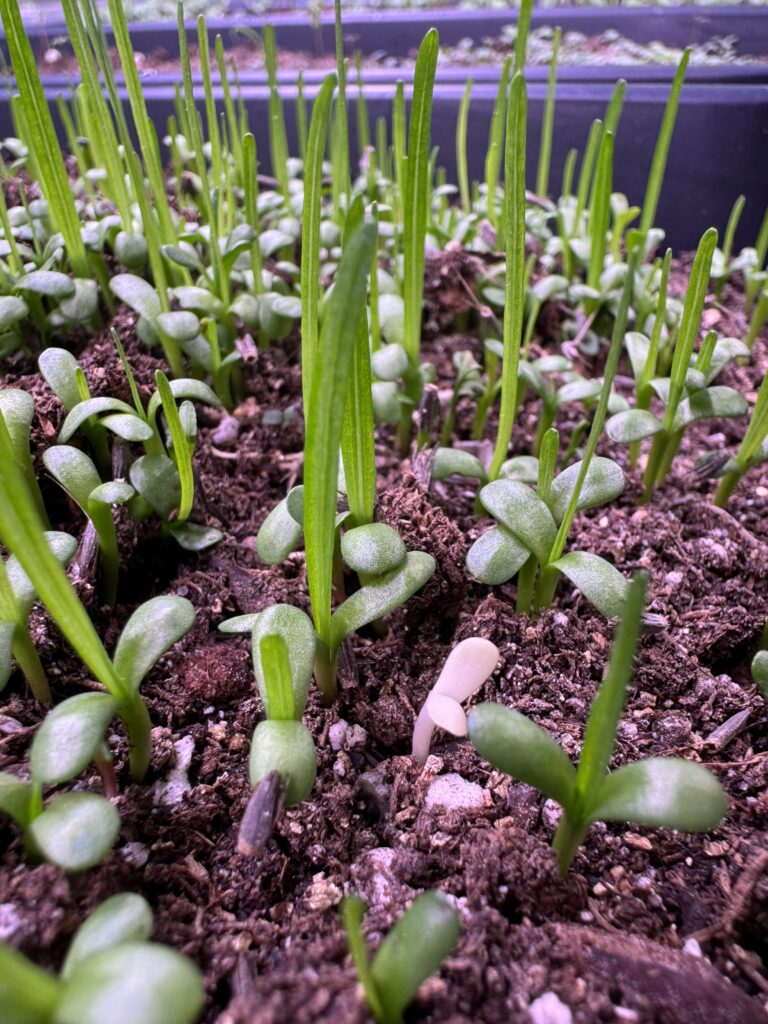
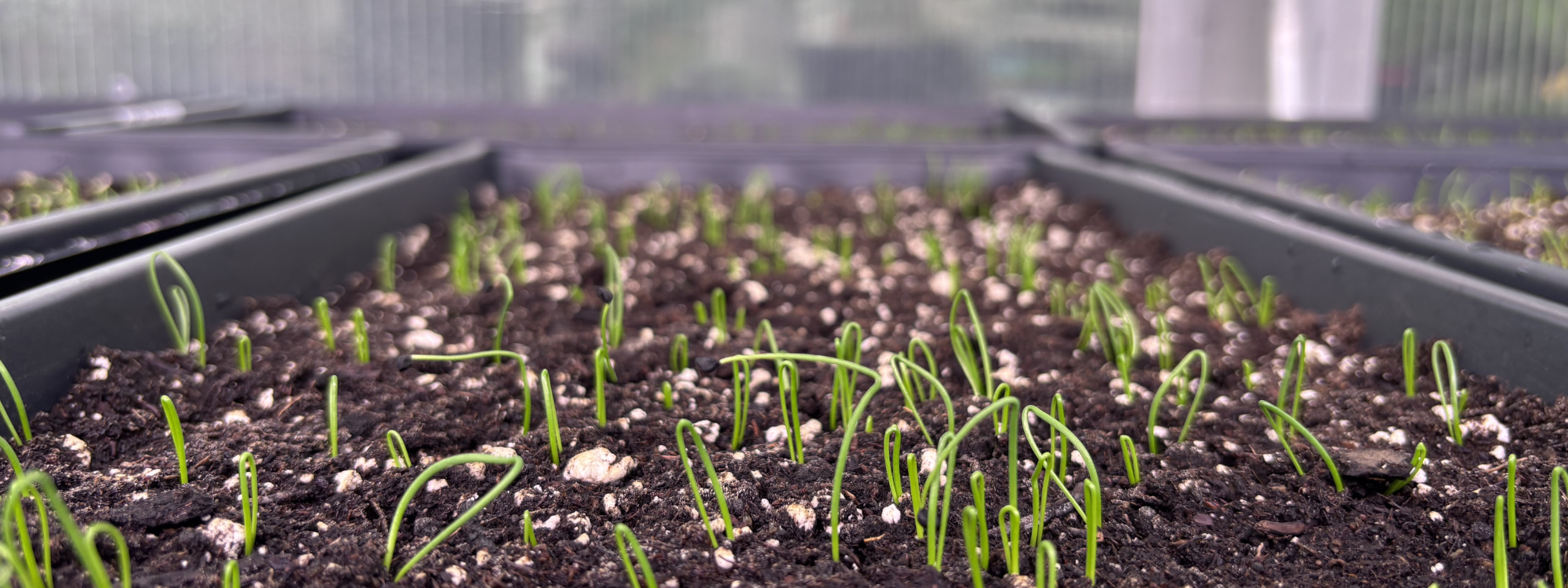
As March settles in with its ever-changing weather, the Market Garden team begins to germinate our summer crops. It’s crucial for us to get a head start on some of our seeds early on in the spring. Long season crops require growing periods that stretch beyond what Minnesota’s climate has to offer. So while snow continues to fall on the streets of Saint Paul, we’re lucky enough to share the GROW-IT Center greenhouse with Metro State University. The greenhouse makes it possible for us to grow the tens of thousands of plants needed for our Market Garden and Conservation Programs, but it isn’t the only resource we utilize.
During the early winter months we create our “Crop Plan.” This spreadsheet helps us plan what crops we’re growing this season, which of our plots they’ll be planted in, and the length of their life cycle from seed to harvest. The crop plan is also used to organize notes, research and growing instructions, making it a critical resource for the whole season. Other tools we use in the greenhouse include germination lids and heat mats, both of which help increase soil temperature and humidity for plants that require high temperatures to germinate. For plants that thrive in cooler temperatures, we’ll use shade cloth instead. This allows them to receive well needed air flow and shades out direct light, keeping soil temperatures down. One to two times a day, seven days of a week the plants get watered. It’s important that we use planting trays with drainage holes and continuously check to make sure that our plants don’t grow algae inside of their cells; our plants don’t grow in bogs! Once a week we fertilize our plants with a liquid organic fertilizer. Previously we’ve used fish emulsion and plant-based fertilizer. It’s important to get a fertilizer that supplies your plants with the proper nutrients that they need while growing indoors.
We recommend that anyone wanting to start their own seeds should research the crops before seeding/planting them. Find crops that will thrive in your environment. Look for varieties that have been bred to withstand common ailments and pests. If you’re purchasing seeds from a nursery or similar source, seeding instructions should either be on the seed packet or the nursery’s website. If you’ve gotten your seeds from an alternate source, reach out to other growers and research the best practices for that crop.
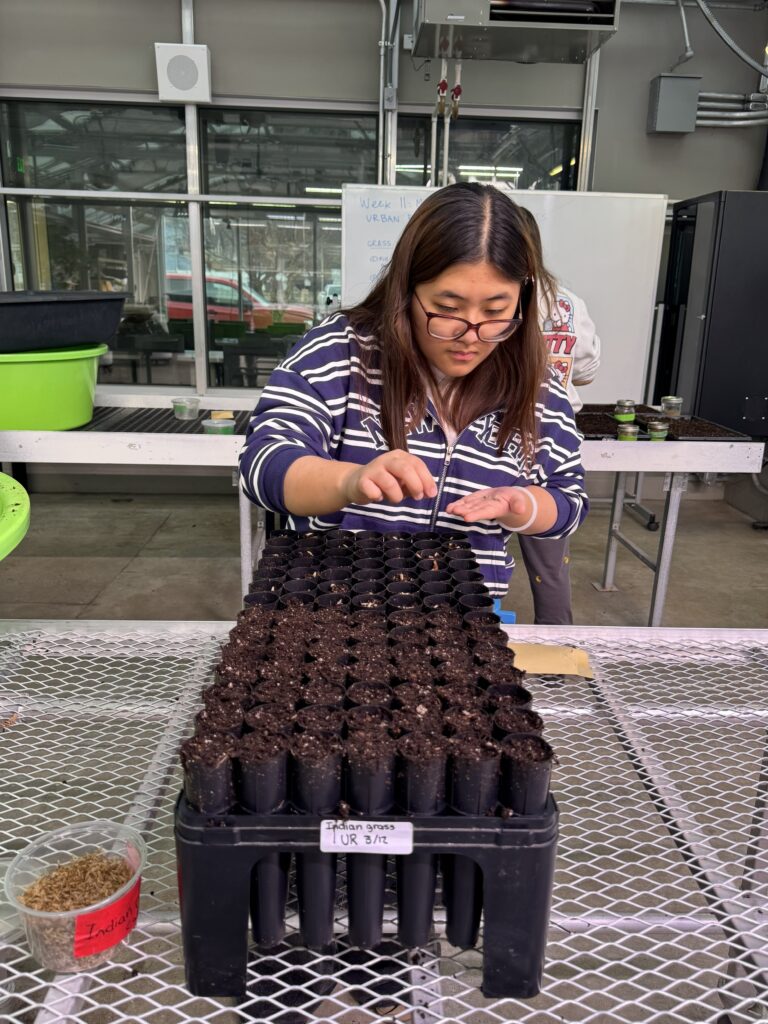
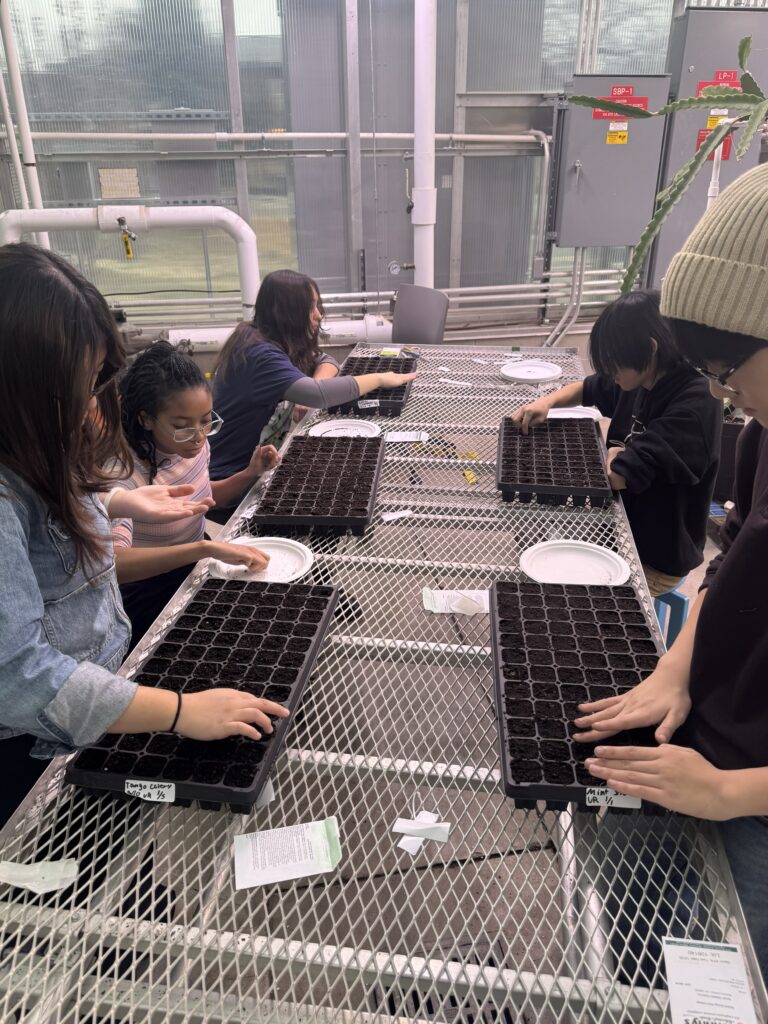
Our youth program also gets involved with the greenhouse. Our March programming is dedicated to getting interns familiar with our seed starting process and gives them the unique opportunity to work in a greenhouse. A typical youth shift in the greenhouse entails packing soil into planting cells to prepare for seeding, sowing seeds into said cells and regular care/maintenance, such as thinning duplicates. Interns are also given the opportunity to run experiments with extra seeds and materials. It’s important that our youth are able to be involved in seed starting, which is a crucial step of the food system. This allows them to develop a deeper understanding of sustainable farming practices.
The month of May typically closes off our period of greenhouse usage. By mid-May the danger of a frost has passed and outdoor low temperatures are in the 45-55 range. The warmer incoming summer transitions us into the “hardening off” period for our plants. Over the course of a week or so the plants get transported to our operations location where they’re left outside to adjust to the outdoor environment. This includes windspeeds, fluctuating temperatures, and pest nuisance. This is the final step before our crops get transplanted into the field.
The work we do wouldn’t be possible without the support from our community. We regularly have volunteer groups and partner organizations lending a hand with our plantings. Greenhouse specific funding helps shoulder the cost of supplies such as fertilizer, planting trays, seeds and much more. The funds that we receive and the help from our community are essential to our mission of serving our community.