
Free Trees for the East Side and North End
The East Side and North End have lower tree canopy coverage than other parts of the city. We are working to change that. Our conservation crews have planted thousands of trees in our public parks over the years, and now we want to bring the trees directly to you!
In 2023, through a collaboration with the US Forest Service, AmeriCorps, Tree Trust, Human Nature (formerly Frogtown Green), and nearby neighborhood organizations, we are helping to facilitate tree-planting in Hamline-Midway, Summit-University, and Payne-Phalen neighborhoods. Human Nature has a goal of 1,000 new trees planted by 2027! You can learn more by visiting their webpage.
Donated trees are kept over the summer months in our innovative community gravel beds located at the Rivoli Bluffs Farm and Restoration Site. By adding to the tree canopy of our community, we help improve the environmental health of residents and visitors.
This project is funded by the MNDNR ReLeaf Grants, as appropriated by the 2023 Minnesota Legislature.
Interested in a Free Tree?
Here’s how to do it!
The time is here! If you want to plant a tree in your space this year, please check out our list of available species and fill out the “Tree Request Form” below, and a staff member will contact you as soon as we can.
Disclaimer: We give trees away on a first come first serve basis and will reach out if and when we can give you a tree.
Bringing the Benefits of Trees to All

2. Browse Tree Species
We offer a variety of tree species, from smaller fruit trees to larger shade trees, to suit your yard’s needs. Once you decide on a species (or two, or three), you can fill out our tree request form.
3. Fill Out a Tree Request⟶
If the tree species you are interested in is not listed as an option, it means it is currently unavailable. It is possible that we will receive more, so if there is a species you are particularly interested in, please let us know.
4. Set Up a Site Visit
Once you complete the form, we will contact you to arrange a site visit at your home. During this site visit, we will discuss potential planting locations and address any other questions you may have.
5. Submit a Utilities Check
After the site visit, a staff member will submit a utilities check with the city to confirm that the area we chose is safe to dig. This may take up to two weeks.
6. Plant Your Tree!
Once receiving confirmation that the chosen planting spot is safe to dig, we will set up a date to get your tree planted. If you are able, you can dig the hole ahead of time. Otherwise, our staff will deliver and plant the tree for you.
7. Follow-up Tree Care
You will receive follow-up emails from staff with tips on how to take care of your newly planted tree. You can also check out our website for a variety of tree care resources.
Learn Your Tree Canopy Score →
Find out more about how your neighborhood ranks and the current canopy cover. Powered by the Tree Equity Score project.
Download Our Tree Care Guide
Looking for more information on caring for your new tree? Download the tree care guide pdf below.
For more detailed resources on watering, pruning, winter tree care, and more, check out the links below!
UofM Extension Trees and Shrubs Guide
Fruit & Ornamental Trees
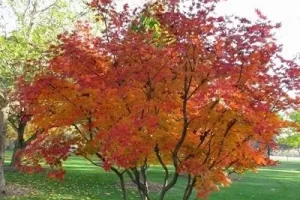
SERVICEBERRY
(Not available until August)
Common Name: ‘Autumn Brilliance’ Serviceberry
Botanical Name: Amelanchier x grandiflora ‘Autumn Brilliance’
Mature Height: 20-25 ft.
Mature Spread: 15-20 ft.
Exposure: Full sun
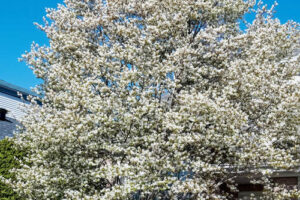
ALLEGHENY SERVICEBERRY
Common Name: Allegheny Serviceberry
Botanical Name: Amelanchier laevis
Mature Height: 15-25 ft.
Mature Spread: 15-20 ft.
Exposure: Partial to Full sun
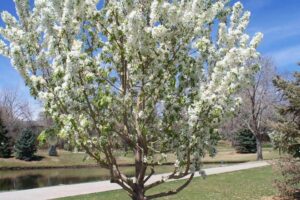
CRABAPPLE
(Not available until August)
Common Name: ‘Adirondack’ Crabapple
Botanical Name: Malus ‘Adirondack’
Mature Height: 15-20 ft.
Mature Spread: 10-20 ft.
Exposure: Full sun
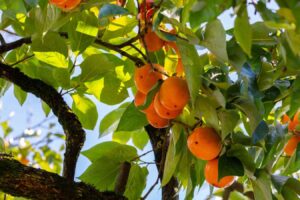
AMERICAN PERSIMMON
Common Name: American Persimmon
Botanical Name: Diospyros virginiana
Mature Height: 35-60 ft
Mature Spread: 20-35 ft
Exposure: Partial to Full Sun
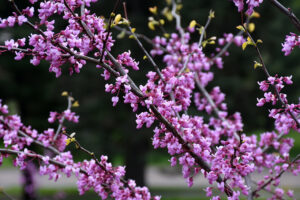
REDBUD
Common Name: ‘Minnesota Strain’ Redbud
Botanical Name: Cercis canadensis ‘Minnesota Strain’
Mature Height: 25 ft.
Mature Spread: 30 ft.
Exposure: Partial to Full sun
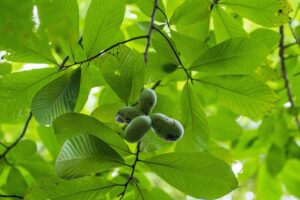
PAW PAW
Common Name: Paw Paw
Botanical Name: Asimina triloba
Mature Height: 15-20 ft.
Mature Spread: 15-20 ft.
Exposure: Partial to Full sun
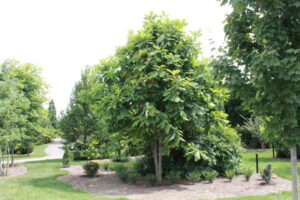
UMBRELLA MAGNOLIA
Common Name: Umbrella Magnolia
Botanical Name: Magnolia tripetala
Mature Height: 25-30 ft.
Mature Spread: 15-25 ft.
Exposure: Partial Shade
Shade Trees
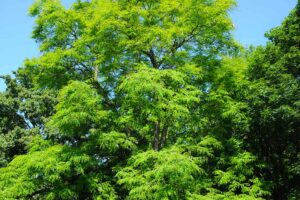
KENTUCKY COFFEE TREE
(Not available until August)
Common Name: ‘Espresso’ Kentucky Coffeetree
Botanical Name: Gymnocladus dioicus ‘Espresso’
Mature Height: 60-75 ft.
Mature Spread: 40-50 ft.
Exposure: Full sun
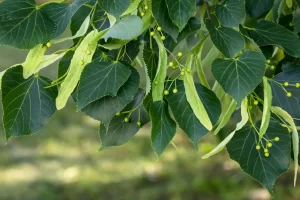
LINDEN
(Not available until August)
Common Name: American Linden
Botanical Name: Tilia americana
Mature Height: 40-60 ft.
Mature Spread: 25-30 ft.
Exposure: Full sun
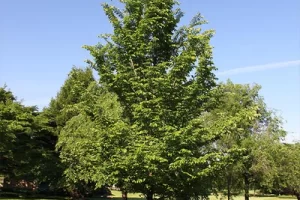
ELM
(Not available until August)
Common Name: ‘Princeton’ Elm
Botanical Name: Ulmus americana ‘Princeton’
Mature Height: ~60 ft.
Mature Spread: 35-40 ft.
Exposure: Full sun
Shade Tree • A true American elm, these trees are clones of an anomalous Dutch-elm resistant tree found in the Chicago area.
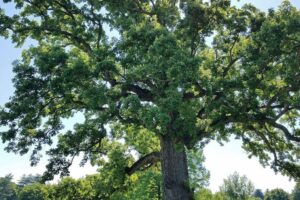
BUR OAK
Common Name: Bur Oak
Botanical Name: Quercus macrocarpa
Mature Height: 60-80 ft.
Mature Spread: 60-80 ft.
Exposure: Full sun
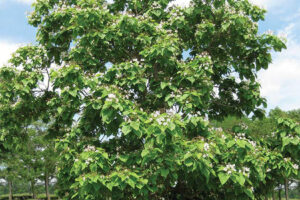
NORTHERN CATALPA
(Not available until August)
Common Name: Northern Catalpa
Botanical Name: Catalpa speciosa
Mature Height: 40-60 ft.
Mature Spread: 20–40 ft.
Exposure: Full sun
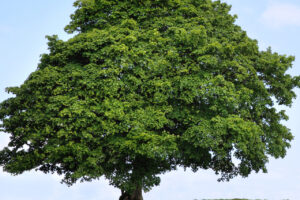
AMERICAN SYCAMORE
(Not available until August)
Common Name: American Sycamore
Botanical Name: Platanus occidentalis
Mature Height: 75-100 ft.
Mature Spread: 50-70 ft.
Exposure: Full sun
Shade Tree • American Sycamores are another species that is a potential candidate for introduction in Minnesota. These trees are famous for being giants of the forest and having majestic, iconic structures that have made them one of the most famous American tree species. They are not particularly hearty to cold weather, so make sure to monitor the tree over the first few years to make sure it does not succumb to the cold winters here. We are happy to replace trees if the winter is too harsh!
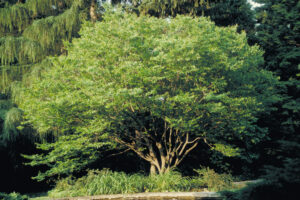
AMERICAN HORNBEAM
Common Name: American Hornbeam
Botanical Name: Carpinus caroliniana
Mature Height: 20-30 ft.
Mature Spread: 20-35 ft.
Exposure: Partial Sun to Full Shade
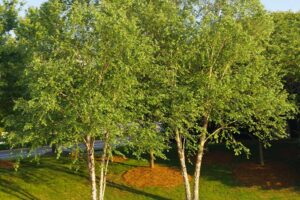
RIVER BIRCH
Common Name: River Birch
Botanical Name: Betula nigra
Mature Height: 50-75 ft.
Mature Spread: 35-50 ft.
Exposure: Full sun
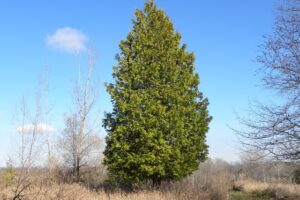
NORTHERN WHITE CEDAR
Common Name: Northern White Cedar
Botanical Name: Thuja occidentalis
Mature Height: 20-40 ft.
Mature Spread: 10-15 ft.
Exposure: Partial to Full Sun
Shade Tree • Although you might have seen this mid-sized evergreen tree along the coasts of the north shore, it can also be a great species for your yard because, although it prefers moist, alkaline soils, it can do well even in drier urban conditions. If grown in an open space, this species will develop a conical shape only spreading to about 10-15 wide. Not only will the leaves bring a unique shade of green to your space, but when crushed, they have a very pleasant scent.